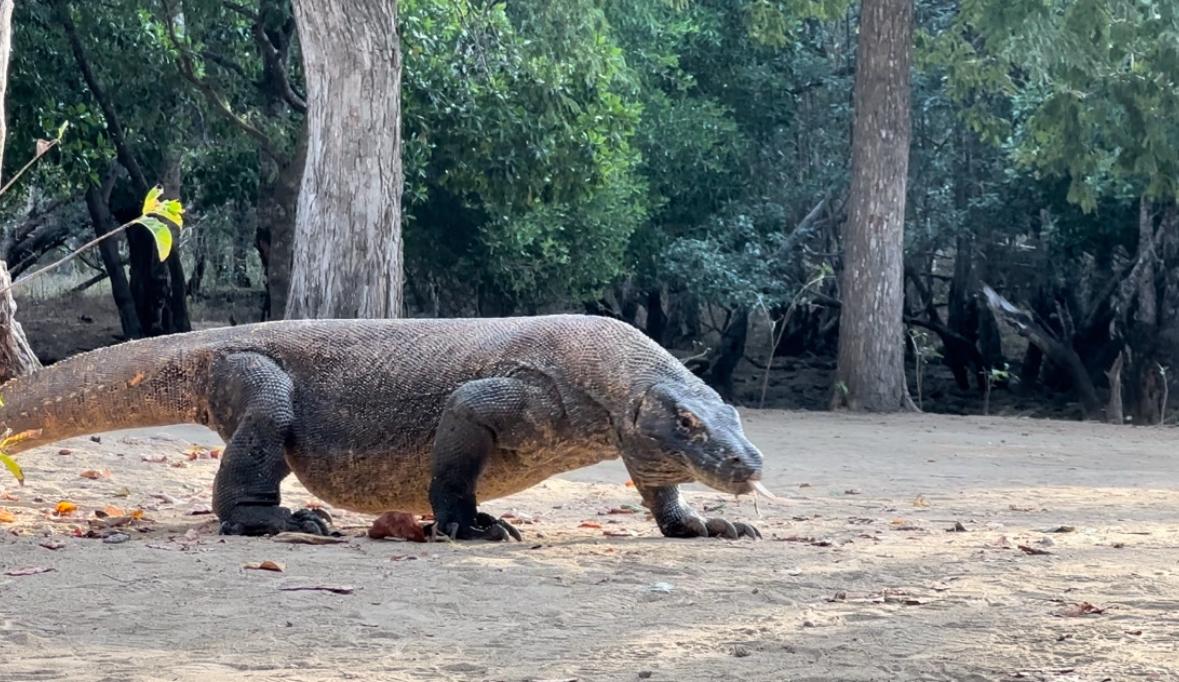
Surviving nowhere on earth but on several islands in eastern Indonesia, Komodo dragons (Varanus komodensis) have triggered both fear and admiration since their ‘discovery’ by Western explorers and scientists (Western ‘civilization’) in the early twentieth century. Explorers set out on expeditions and brought back dragons, dead and alive, for the collections of zoos and natural history museums across the globe. Scientists ventured into research on the mystery of their evolution and the wonder of their deadly saliva. Conservationists developed projects to ensure their survival amid the threat of climate change, while tourists flocked on luxury cruises to meet the dragons in a “real Jurassic Park” or queued to greet them in captivity in zoos. Investors sought concessions for ecotourism businesses on the islands, and many truly believed they could “save nature by selling it.”
Yet local communities on the Komodo islands and surrounding areas—who have lived and shared the islands with the dragons for millennia—consider the dragons their twin brothers and sisters, born from the same human mother. How can it be that the animal is considered dangerous wildlife by some but an intimate relative by others? Why have Komodo dragons generated such fear and wonder, care and intimacy? What do different actors—explorers, scientists, investors, and conservationists—do in relation to the dragons?
“Komodo Dragon and Their Human Twins” traces different ways in which humans relate to the Komodo dragons—and to nature at large—examining the foundations and consequences of those different modes of human-nature relations. It digs into the archives of expeditions to Komodo Island, the works of scientists, and the subsequent projects by various actors, such as The Nature Conservancy, United Nations agencies, and large businesses, in classifying and governing the dragons as wildlife. It also tells the story—from the point of view of an anthropologist who was born and grew up on one of the islands—of the reality of living together with the dragons among the indigenous people and of how they navigate the powerful state and corporate powers coming to their islands in the name of conservation and ecotourism.