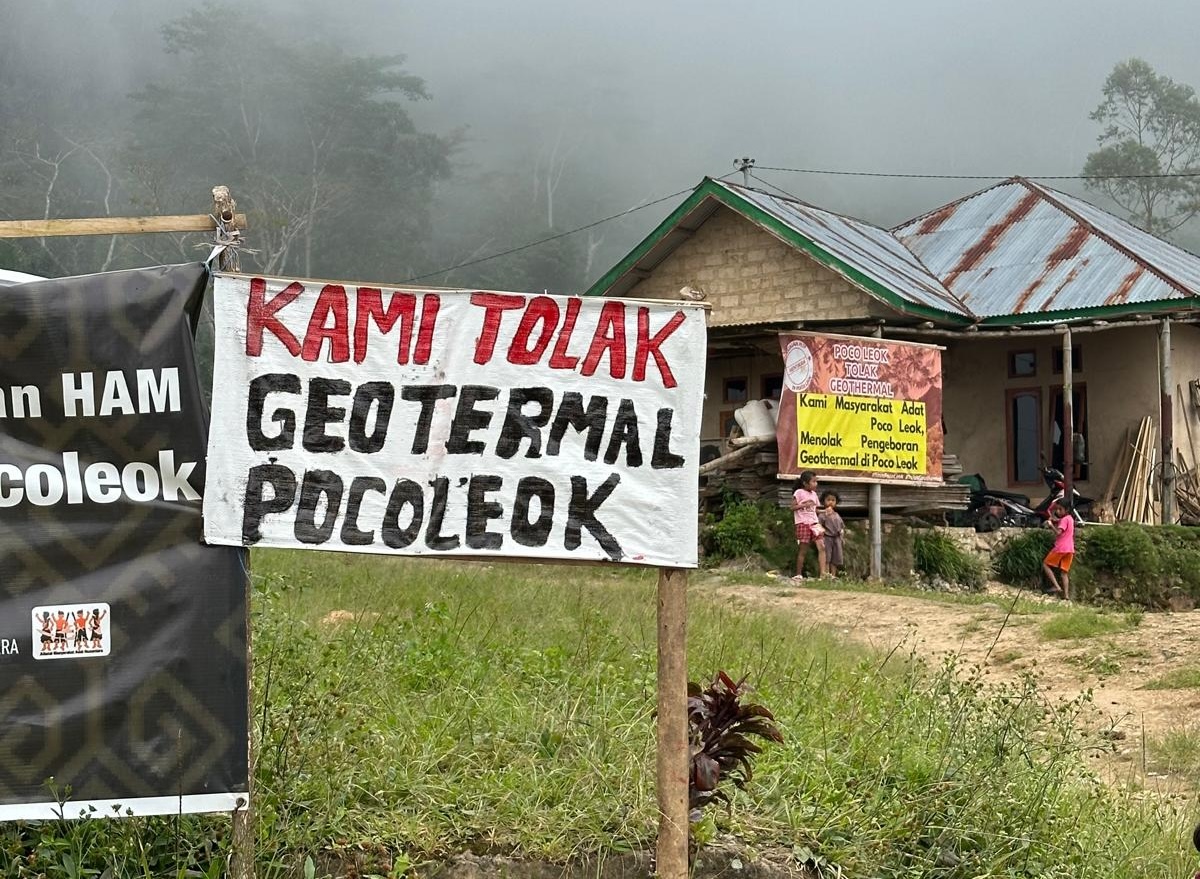
Decarbonization has become urgent around the globe as the effects of anthropogenic climate change worsen. However, the transition to renewable energies has the potential to perpetuate and worsen injustices. Despite its growing international importance, geothermal energy development has been understudied by social scientists relative to other types of renewable energy. Addressing this gap, this research examines the fraught political economy of geothermal development and the process of making Flores, Indonesia into a “geothermal island.” There, friction between state-owned companies and indigenous communities has stalled geothermal energy development.
We hypothesize that contestations over geothermal development on Flores are animated by thedisjuncture between the techno-scientific spatial imaginaries of geothermal expertise and planning and gendered indigenous analysis of “living space.” The project will investigate this proposition through three operational research questions on how the political economy of the Indonesian state influences geothermal development, how the indigenous analytic of ‘living space’ contrasts with techno-scientific spatial imaginaries, and how gendered politics shape indigenous understandings of geothermal impacts.
The research team will generate data through qualitative methods including semi-structured and walking interviews, participant observation, participatory mapping, and workshops with officials, corporate project implementers, development practitioners, and the men and women of four indigenous communities that are at the forefront of geothermal development. It will also build on discourse analysis of geothermal documents, including site maps, feasibility studies, project plans, and impact studies.
The project brings together feminist political ecology and indigenous analysis to deepen engagements with gender politics and the multiplicity of spatial imaginaries at stake in the implementation of geothermal energy production and the green transition in the Global South more generally.